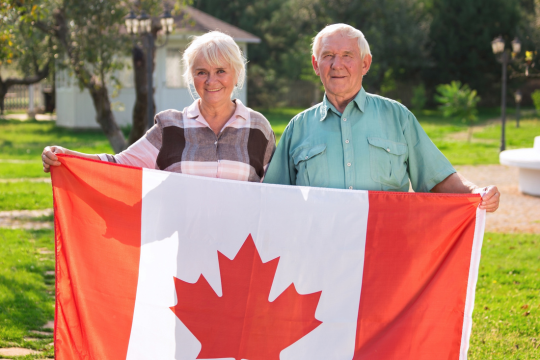
A study found that the rising cost of living and fear of running out of money were the biggest concerns of respondents over the age of 50.
For the last three years, in partnership with the Environics Institute for Survey Research, the National Institute on Ageing (NIA) has conducted a survey to better understand the perspectives and experiences of aging in Canada.
NIA’s mission is to “improve the lives of older adults and the systems that support them by conducting research, convening stakeholders, sharing information, shifting attitudes and advancing policies and practices.”
Perspectives on Growing Older in Canada: The 2024 NIA Ageing in Canada Survey, published early in 2025, includes responses from a representative sample of nearly 6,000 Canadians aged 50 and older to questions about social wellbeing, financial security and health and independence of older adults. The results reveal important insights about the realities of aging in Canada, emphasizing why Federal Retirees advocates for quality of life in retirement, including financial security, access to health care and positive, healthy aging.
Financial security
Compared to 2023, more Canadians aged 50 and older were able to save in 2024, but one in four reported household incomes that were inadequate to meet their current or long-term needs. The rising cost of living (70 per cent) and fear of running out of money (48 per cent) were among the top financial concerns.
Using the Material Deprivation Index (MDI), significant financial hardship was found among older Canadians.
The MDI, a newly developed indicator of poverty in Canada, is used to complement income-based measures. It assesses “a household’s ability to afford 11 essentials items and services needed for a minimally acceptable standard of living.” Households are considered at the poverty-level if they cannot afford two or more items. Using MDI, one in five Canadians aged 50 and older likely has a poverty standard of living. Among Canadians 65 and older, 14 per cent are likely living in poverty using MDI. Whereas using the Market-Basket Measure, in 2022 Statistics Canada reported 6 per cent of Canadians 65 and older living in poverty.
Social well-being
“Social well-being is key to healthy aging. Strong social networks, regular interactions and a sense of community help people stay active and engaged across the lifespan,” the report states. Yet, in 2024, 43 per cent of older adults in Canada were at risk of social isolation and 59 per cent had experienced some degree of loneliness. This statistic remains relatively unchanged since 2022
While many (39 per cent) engaged in social or recreational group activities at least weekly, 23 per cent said they almost never got to engage in social or group activities, for reasons including cost, health status and lack of connection. And 68 per cent of Canadians aged 50 and older reported experiencing at least one form of everyday ageism in their daily lives, most commonly through indirect messages.
Health
Access to health care remains a challenge, including home and community care. In 2024, 88 per cent reported needing health-care services, but 35 per cent were unable to get the services they needed, when they needed them, often because of limited appointment availability. Cost was also an obstacle for 19 per cent of Canadians aged 50 to 64, compared to three per cent of those aged 80 and older.
Roughly 16 per cent reported needing home care and/or community support services, but in 2024, fewer than half of those who needed these services could access what they needed most of the time. Notably, Canadians aged 80 and older were most likely to report consistently getting home and community care and services they needed.
Finally, when asked about the overall aging experience, Canadians 50 and older feel very (13 per cent) or somewhat (49 per cent) positive about the prospect or experience of getting older. However, there has been a decline in optimism among those aged 70 and older, most significantly among Canadians 80 and over, a worrying indicator of the challenges older adults may face, the authors note.
These are just some of survey results, but they offer a glimpse of the experiences of aging in Canada and point to areas of focus in support of a positive, healthy aging experience for all Canadians.